



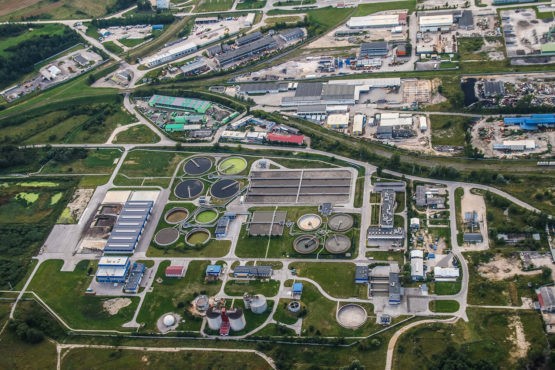
Desalination – the conversion of saltwater to freshwater – has been limited by high operational costs. A new device capable of turning desalination waste into commercially valuable chemicals could make the process cheaper and more environmentally friendly.
Taking a new approach to an old problem, Stanford researchers have created a device that could make converting seawater to freshwater profitable and environmentally benign. Their research, published in ACS Sustainable Chemistry & Engineering, outlines an efficient method for transforming water with very high concentrations of salt and chemicals, known as brine, into commercially valuable chemicals as part of the desalination process. The approach avoids the need for disposing potentially hazardous chemicals in local ecosystems.
“Desalination could be a powerful tool to mitigate water scarcity around the world, but it is limited by energetic and monetary costs for treatment and brine management,” said study senior author Will Tarpeh, an assistant professor of chemical engineering at Stanford. “By reimagining brine as a resource, we aim to incentivise its collection and treatment before discharge.”
Desalination plants around the world produce about 27 billion gallons of drinking water each day – more than the daily total used by all U.S. households. However, this drought-proof approach of converting brackish or saltwater to potable water is costly because it requires a lot of energy. It also produces about one and a half times more brine than potable water.
Splitting Saltwater
For their new study, the researchers designed and tested a device that splits the components of brine through a method called electrochemical water-salt splitting. Water-salt splitting separates the brine into positively charged sodium and negatively charged chlorine ions with the use of an electrochemical cell – a device that employs electrical energy to kickstart chemical reactions. Once the bonds are broken, sodium and chlorine combine with other elements to form new chemicals including sodium hydroxide, hydrogen and hydrochloric acid.
Sodium hydroxide, also known as lye, is used in the manufacturing of many products including soap, paper, aluminum, detergents and explosives. Hydrogen has primarily been used for industrial purposes such as fertiliser production, and energy storage and delivery. Hydrochloric acid is used broadly across commercial industries as a component in battery production, as a food additive and even in leather processing. It also has the added benefit of on-site use for cleaning at desalination plants.
“Our research was able to identify a design that not only costs less but also outperforms conventional water-splitting methods,” said lead author Linchao Mu, a postdoctoral research fellow of chemical engineering at Stanford. “These insights can improve desalination design to save operating costs while generating revenue.”
Reducing Waste
The new approach could also help cut brine disposal costs, which can account for up to a third of total desalination expenses, and avoid damaging environmental impacts. Current brine disposal methods can cause salinity and acidity spikes along with oxygen-deficient conditions in waterways that kill or drive off animal and plant species.
While the current study did not produce chemical solutions suitable for commercial use – they were more diluted – the researchers note this is a first step in providing a foundation to inform future design and operation of electrochemical water-salt splitting. The researchers plan to continue their work while partnering with desalination plants to advance energy and cost-efficiency.
“Ultimately, this exemplifies our vision to design water treatment that recovers valuable products from ‘waste’ streams using selective separations,” Tarpeh said.