
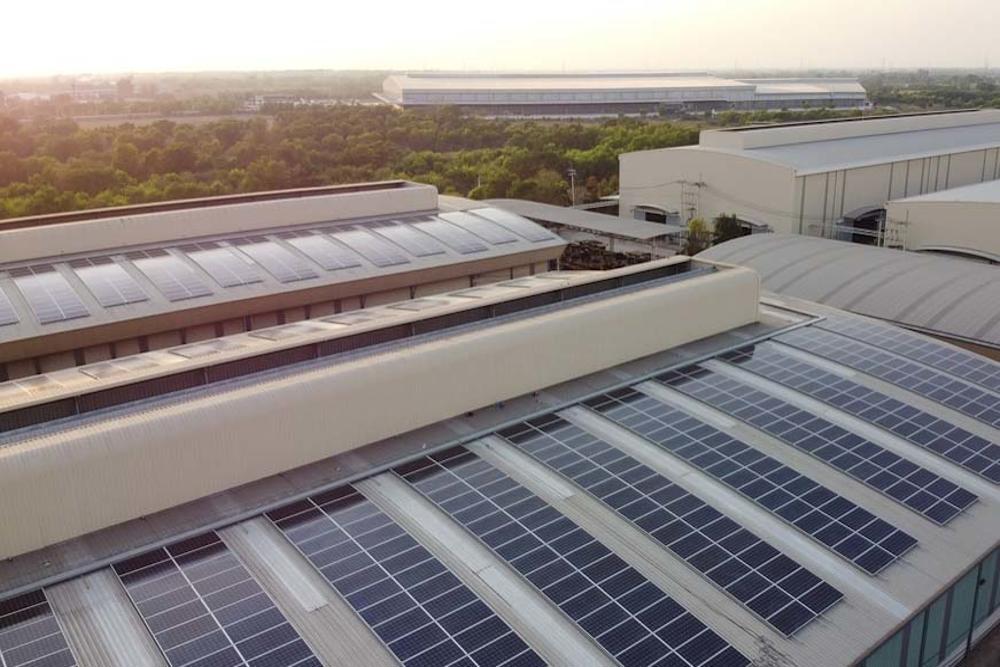
A team at RMIT University has created a software to help architects and engineers incorporate, source and cost building-integrated photovoltaics (BIPV) in a building’s conceptual design phase.
BIPV are building features such as roof tiles, classing and windows that double as solar panels.
Depending on the dwelling, BIPVs can cover a greater area of a building, generating solar energy from different angles — they can also be customised.
Despite the potential of BIPVs, conventional roof-mounted panels continue to account for the lion’s share of new installations in Australia due to the extra complexity in predicting performance and sourcing BIPV technology.
The new software, that is funded by RMIT and the Australian Renewable Energy Agency, is the first of its kind to be designed using Australian data.
Australian PV Institute Director and RMIT’s Solar Energy Application Group Project lead Associate Professor Rebecca Yang said that she hoped the tool — BIPV Enabler — would help make buildings greener.
“This is the perfect solution for building designers and developers looking to select the right solar option to suit their design. We’re making integrated-solar a more attractive option to developers, slicing the time it would normally take to research and implement incognito solar devices. This isn’t just for new buildings either. Those looking to retro fit integrated solar into existing buildings will benefit too,” said Yang.
The tool integrates product, regulation, technical, economic and construction data to create 3D models and detailed lifecycle simulations tailored to each building’s planned location.
It comes as the construction of Australia’s first office tower to be fully clad in solar panels was announced last year.
For architects like Nic Bao, BIPV Enabler is set to help bridge the gap between BIPV technology and architectural design.
RMIT Architecture Lecturer Nic Bao said that having a tool to effortlessly incorporate factors such as climate, building code and materials would make solar-savvy design easier.
“There are so many technical factors to consider when integrating BIPV into a design that it hadn’t been a popular choice, which was a missed opportunity. Making BIPV design more accessible promotes sustainable development of energy-efficient buildings, while providing opportunities for low-carbon architecture,” said Bao.
The other challenge faced by designers and developers using integrated solar is choosing and sourcing materials.
BIPV Enabler helps with both, boasting Australia’s first photovoltaic product database where Australian suppliers can be easily identified.
Among the tool’s features are maps, a 3D shape library, solar visualisations, hourly weather data and pricing information for materials and feed-in tariffs.
Yang said BIPV Enabler also worked with computer-aided design programs and could be scaled and customised to incorporate other open-source datasets to suit changing needs.
“We hope to see more buildings capable of generating solar electricity, while maintaining good design standards – a win for the planet and aesthetics,” said Yang.