



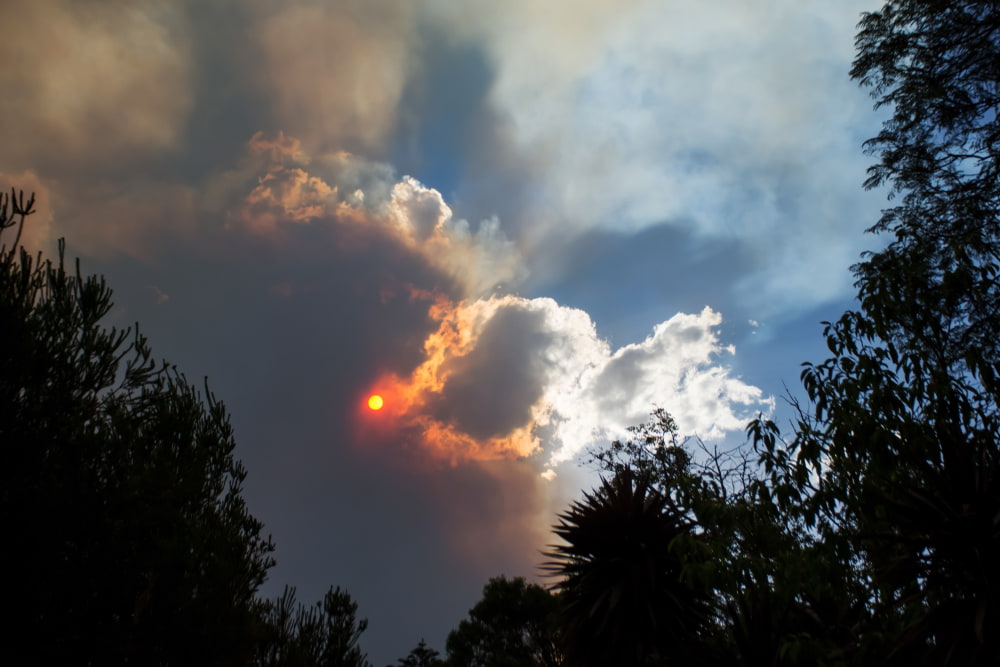
Smoke from major bushfires can sharply reduce the electricity produced by solar farms, even when the fires are burning more than 150 kilometres away, according to new research from UNSW Sydney.
The researchers say better smoke forecasting, more frequent panel inspections and cleaning, and changes to how panels operate could help operators prepare for these events and protect their equipment.
The recommendations follow a study of two major Australian disasters, the 2019-2020 Black Summer fires and Victoria’s 2009 Black Saturday fires.
Using historical weather and satellite data, the team modelled how smoke and airborne particles affected solar generation and panel temperatures across south-eastern Australia.
During Black Summer, the researchers estimated that generation fell by as much as 70 per cent within about 50 kilometres of fire hotspots over several consecutive days. Beyond 150 kilometres, losses of up to 30 per cent were still estimated.
Dr Shukla Poddar from UNSW’s School of Photovoltaic and Renewable Energy Engineering said: “Even at a radius of 150 kilometres away from the hotspots, there was around 30 per cent reduction on those bushfire days, or just after the bushfire days, because a lot of the wind had transported the smoke inland across New South Wales.”
The effects varied with the severity of the fires and the weather.
During Black Saturday, estimated reductions were lower, at around 18 per cent near hotspots and up to 10 per cent in more distant regions.
A key recommendation is to combine bushfire information, wind patterns and smoke-trajectory modelling to predict which solar farms are likely to be affected.
Operators already use weather forecasts to anticipate high temperatures and strong winds, and a similar smoke warning system could give them time to plan inspections, schedule cleaning or reposition panels.
Dr Poddar said: “If operators got an alert that their solar farm might be impacted, they could potentially adapt some mitigation strategies, such as adjusting the panel angle where appropriate or being aware that additional cleaning may be required,” she said.
Therefore, the paper recommends more frequent cleaning when smoke is likely, regular thermal inspections, and better remote monitoring and fault detection so operators can quickly isolate affected parts of a system.
It also calls for bushfire management measures, including controlling vegetation beneath panels and maintaining firebreaks.
Dr Poddar suggests operators could consider temporarily adjusting solar angles during particularly hot periods, rather than always positioning panels for maximum sunlight.
The aim would be to reduce heat exposure and help loose particles move off the surface, although panels may produce less electricity while turned slightly away from the Sun.
The findings could also guide where new solar farms are built, helping developers assessing nearby bushfire history, prevailing winds and likely smoke pathways before investing in a site.
Extreme bushfires are becoming more frequent and intense in regions including California and southern Europe, and smoke from California’s 2020 wildfires reached Europe.
