Scientists in Australia and China are hoping to make the world’s first safe and efficient non-toxic aqueous aluminium radical battery.
Teams from Flinders University in South Australia and Zhejiang Sci-Tech University in China have reported the first stage of developing these novel batteries in a new article published by the prestigious Journal of American Chemistry, the flagship journal of the American Chemical Society.
Dr Kai Zhang, from Zhejiang Sci-Tech University, and Associate Professor Zhongfan Jia’s research lab at Flinders University collaborated on the (electro)chemistry of stable radicals in the most-used Lewis acid electrolyte (Al(Otf)3 and battery test.
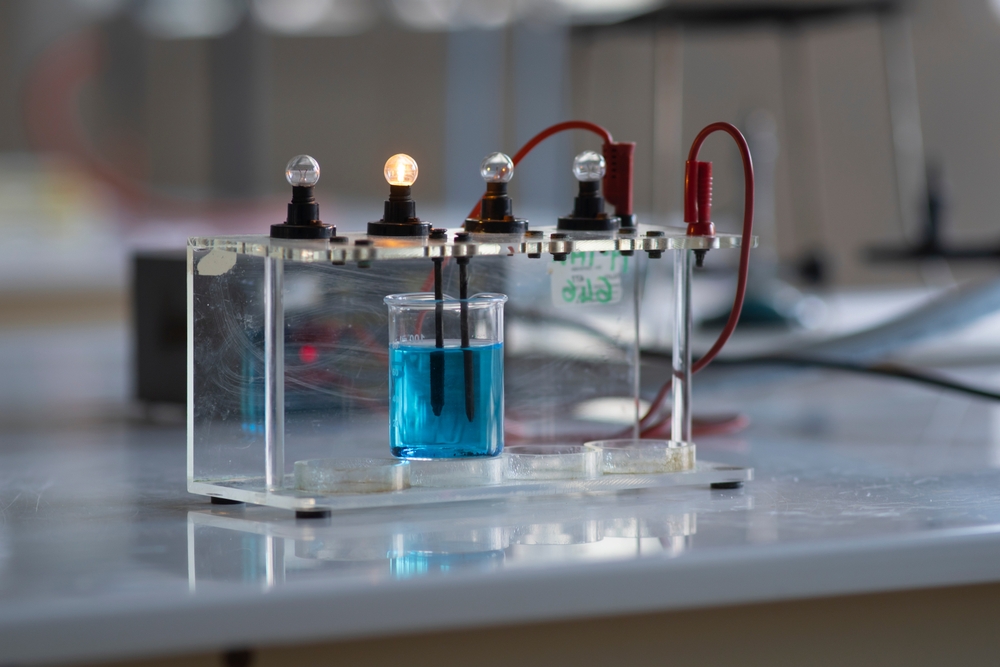
The team developed the first design of aluminium radical batteries which use water-based electrolytes that are fire-retardant and air-stable, delivering a stable voltage output of 1.25 V and a capacity of 110 mAh g–1 over 800 cycles with only 0.028% loss per cycle.
Professor Zhongfan Jia, from Flinders University’s College of Science and Engineering, hopes to use biodegradable materials for development of the soft-pack batteries in the future to make the product safe and sustainable.
Multivalent metal ion batteries, including Al3+, Zn2+ or Mg2+, use abundant elements of the Earth’s crust and provide much higher energy density than lithium-ion batteries (LIBs), he says.
“In particular, aluminium-ion batteries (AIBs) attract great attention because aluminium is the third most abundant element (8.1%), which makes AIBs potentially a sustainable and low-cost energy storage system.”
However, one of the major challenges for current AIBs is the slow movement of Al3+ ion complexes, which lead to AIBs with low cathode efficiency. Organic conjugated polymers are emerging cathodes for AIBs to address the ion transport issue but their battery voltage output performance remains poor.
Stable radicals are a class of organic electroactive molecules that have been widely used in different organic battery systems. The first of this kind was commercialised by NEC® in 2012.
The Jia Lab at Flinders University has previously developed radical materials for organic hybrid LIBs, sodium-ion batteries, and all-organic batteries. These radical materials have never been applied in AIBs due to lacking understanding of their (electro)chemical reaction in electrolytes.