


A new Monash University-led research hub has launched to tackle the materials challenges shaping Australia’s clean energy transition, from battery lithium production to lower-emissions silicon and carbon capture.
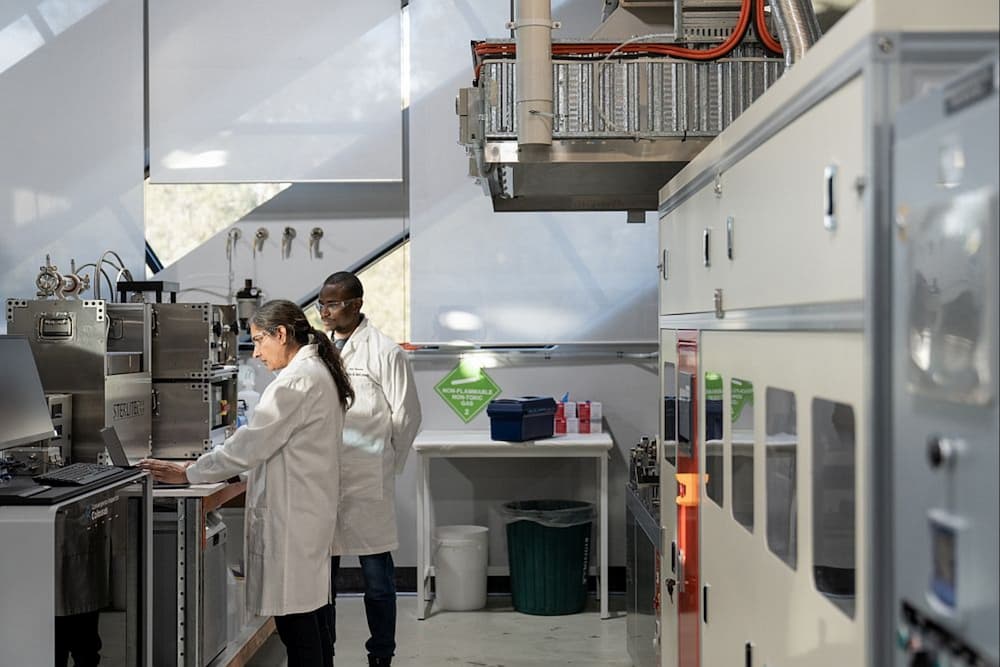
The Australian Research Council (ARC) Research Hub for Critical Energy Separation Materials (CREST Hub) unites five Australian universities and six industry partners. Incorporating the joint Monash–CSIRO Membrane Pilot Facility, the hub is designed to bridge the gap between laboratory discoveries and commercial-scale manufacturing.
CREST Hub Director Professor Matthew Hill said selective separation technologies are vital to building resilient domestic supply chains.
“Many of the materials needed for the clean energy transition are found in complex mixtures, industrial waste and resources that are currently difficult or costly to process,” Professor Hill said.
Assistant Minister Julian Hill welcomed the Melbourne initiative, noting it aligns with the federal government’s Future Made in Australia agenda by lowering emissions and creating local manufacturing opportunities.
“By bringing researchers and industry together, the hub is exploring ways to process, refine and recycle more critical materials here at home, using less energy, lowering emissions and creating new opportunities for Australian manufacturing.”
Monash University Deputy Vice-Chancellor Professor Robyn Ward AM and ARC Academic Director Professor Alison Ross also highlighted the importance of connecting academic expertise with industry needs to train the next generation of researchers.
The hub’s research spans advanced membranes for recovering metals from ores and waste, eco-friendly extraction solvents, ammonia transport materials, and recycling carbon dioxide for hydrogen transport.
It is also pursuing lower-carbon silicon metal production for solar panels, electric vehicles, and AI infrastructure.
Since commencing in June 2026, the hub has established four projects and enrolled four PhD students, with nine more expected in 2027.
Among its industry partners is Element Zero, led by Monash alumnus Dr Bart Kolodziejczyk. The company is scaling an electrochemical process that converts iron ore directly into green iron, currently producing 100 kilograms daily and targeting one tonne per day by mid-2027.
“We want to help Australia move beyond exporting raw materials and develop the technology to process and add value to those resources here,” Dr Kolodziejczyk said.