According to global consultancy Partners in Performance, Australia stands at the forefront of a remarkable opportunity to revolutionise the reduction of global carbon emissions and earn billions in export earnings by using green hydrogen — to generate green steel, ammonia, cement, eFuels and mining explosives.
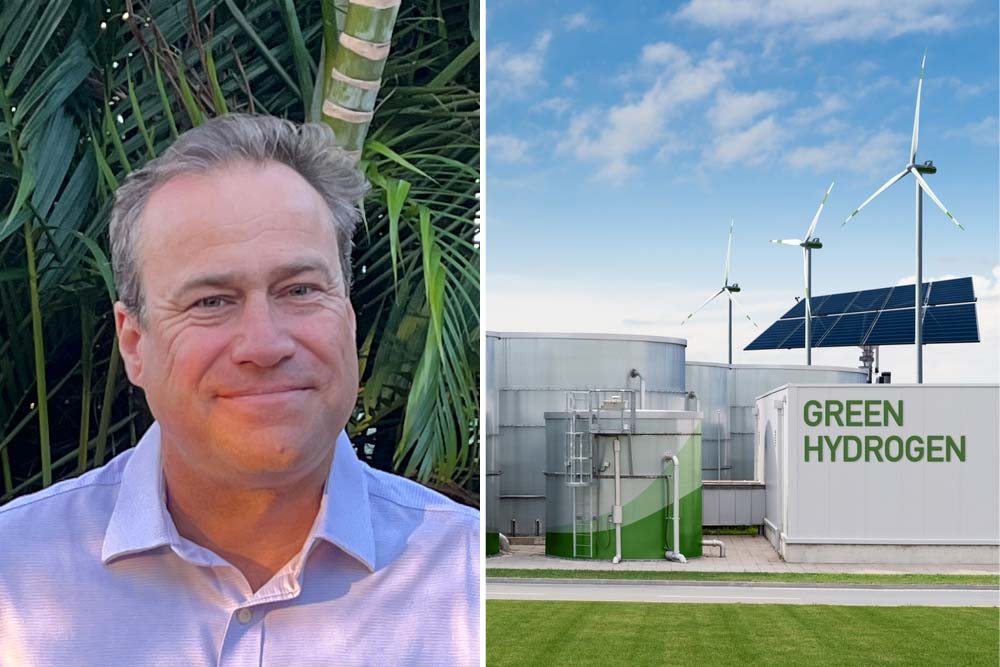
Partners in Performance Director Brian Innes believes Australia’s nascent green hydrogen industry should focus less on exporting the carbon-neutral fuel and concentrate more on using it in the local production of traditionally carbon-intensive products for export.
“The production of steel, shipping and aviation fuels, fertilisers, explosives and cement alone account for over a quarter of global greenhouse gas emissions. Not only can we reduce our own emissions through renewable energy, we can also have a significant impact on the emissions of our trading partners through the local production and export of green steel, green fertilisers, green cement, eFuels and explosives,” said Innes.
“Substituting products produced overseas with Australian coal and LNG with locally manufactured products using locally-produced green hydrogen will massively reduce Australia’s upstream emissions.”
The global demand for these environmentally friendly products reaches into the trillions of dollars.
Critics often argue that Australia’s efforts to reduce emissions are inconsequential due to the country’s share of only 1.5 per cent in global emissions.
“We are blessed with the land, sun and wind needed to make enough renewable energy to produce green hydrogen which can be used in the production of products that other countries are producing with large carbon footprints,” said Innes.
Innes also highlights the possibility of displacing foreign producers and massively reduce emissions occurring in other countries.
“Countries will no longer rely on Australian coal and LNG to manufacture steel, fertilisers, aviation and shipping gas and ammonia, significantly reducing their greenhouse gas emissions produced from burning Australian sourced coal or used in the production of steel from our iron ore,” said Innes.
Steel production globally accounts for 8 per cent of global greenhouse gas emissions. Australia’s share of iron ore exports is over 55 per cent and the country is also the world’s largest exporter of metallurgical coal, used in steel production.
“In essence, we have the potential to make a substantial impact on a quarter of global emissions through the provision of green iron, green ammonia, green eFuels, green mining explosives and green cement,” said Innes.
However, Innes stated that it was up to regulators to implement pro-renewable rules to help drive local industries, like making it compulsory for all ships visiting Australia to use eFuels or setting quotas for the percentage of locally produced steel to be manufactured using green hydrogen.
“The production of green hydrogen is very capital intensive, so in order to develop at scale, we need regulators to help drive that,” said Innes.
About 176 million tonnes of ammonia is currently produced globally per year, mostly for use as fertiliser. It is made using an energy-intensive century-old process that strips hydrogen from natural gas using steam, which produces CO2 as a by-product.
The hydrogen is combined with nitrogen from the air at high pressure and temperatures of hundreds of degrees Celsius.
Green ammonia instead uses renewable energy to strip hydrogen from water, not natural gas, with no CO2 by-product.
The rest of the process remains the same but is powered by renewable energy.
Markets for green ammonia are not limited to fertilisers, with liquid ammonia viewed as a potential liquid fuel for shipping, which is responsible for three per cent of global emissions.
Green hydrogen is incredibly versatile, including its role in producing eFuels for vehicles, trucks, and aircraft — which involves combining green hydrogen with recaptured carbon dioxide through synthesis, resulting in eFuel, often in methanol form.
Methanol can directly power vehicles or be further refined, even transformed into gasoline through methanol-to-gasoline processes, serving as a substitute for petrol and diesel.
Another avenue for emission reduction lies in the cement sector.
The incorporation of green hydrogen as a reducing agent in raw material blends can decrease clinker content, resulting in potential CO2 emission reductions of up to 50 per cent.
“Australia keeps beating itself up about whether it can meet its emissions targets and yet it possesses the means to not only drive down global emissions but also generate substantial export earnings amounting to many billions of dollars,” said Innes.