Australia’s future electricity system must include zero-emissions energy storage that can be dispatched overnight to urgently replace retiring coal power plants, Australia’s peak body for solar thermal has warned as it attends the industry’s international conference, SolarPACES.
The Australian Solar Thermal Research Institute (ASTRI) is an ARENA-funded group of academics, engineers and energy industry stakeholder who facilitate awareness and commercial uptake of solar thermal technologies such as Concentrated Solar Power (CSP).
CSP uses mirrors to concentrate the sun’s rays, in the form of heat, which is then stored and subsequently used to drive an electricity-generating turbine.
As the first utility scale CSP plant nears commissioning in Australia, ASTRI is warning energy policymakers that the technology race that should be led by Australia is being pursued offshore, as evidenced by the representatives at SolarPACES in New Mexico.
“There’s more than a hundred CSP plants in operation around the world, producing 32,000 GWh of generation, yet in Australia we’re yet to reach a final investment decision on the first one,” said Director of ASTRI, Dominic Zaal.
“Given our high solar radiation levels, concentrated solar should be one of our core competencies, but other countries such as Morocco, Chile and China have already settled on the technology and are building CSP capacity into their grids.”
Mr Zaal said CSP provided three things that the Australian energy system needed: zero-emissions electricity at a utility scale; synchronous power, thanks to the fact that it uses heat and a turbine to produce electricity; and 12 – 15 hour storage which allows CSP to power the crucial ‘overnight’ market for electricity, as well as cover for ‘reliability events’.
“The Australian system is aiming for a target of over 80 per cent renewables in the National Energy Market, which will predominantly consist of solar PV and wind generation,” said Mr Zaal.
“Solar PV and wind are variable generation technologies, so the more that PV and wind enter the system, the greater the grid instability and the stronger is the argument for gas – and even coal – to remain in the grid as firm, dispatchable power.”
Coal currently provides most of Australia’s overnight electricity, but coal-fired generation is being actively retired and a replacement is required.
Mr Zaal said gas or even the postponement of coal retirements is not the only solution to the ‘overnight’ storage problem.
“With such abundant solar resources, Australia must look to CSP as one of the key options to address the overnight issue. That’s why we call it ‘Solar at Night’.”
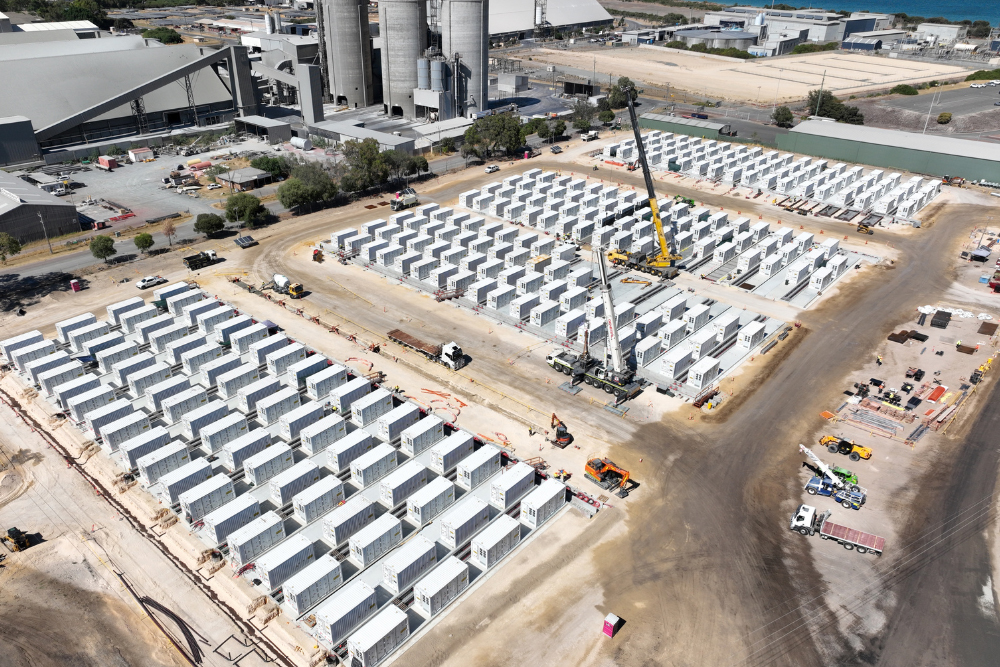
Mr Zaal said lithium-ion battery was the best zero-emission storage technology for mobility and short duration uses, however it was not fit-for-purpose in a long-duration, utility scale role.
“Batteries are optimal for up to 2 – 4 hours of storage for utility scale power, but batteries don’t meet the 12 – 15 hours requirement.
“There are only a few options for zero emission, dispatchable storage that could deliver utility-scale power for longer than 12 hours, including pumped-hydro, CSP, bioenergy and hydrogen.
“CSP makes sense in Australia because of our high solar radiation levels.”
He said that while CSP had high capital costs, the energy it provided was relatively low cost. CSP delivered the lowest aggregate energy cost to end users when it was considered as part of an optimised system, with PV for day-time energy, wind for some day and night-time energy, and CSP for firm night-time energy.
“Over twenty new CSP plants are being progressed, including ten new plants in China, new plants in Spain, a 700MW project in Dubai, and an 800MW CSP plant in Morocco,” said Mr Zaal.
He said Australia’s Energy Ministers had recently agreed to put emissions goals into the planning of their state electricity systems, meaning that the long-duration storage gap could no longer be put on the back-burner.
“The long duration storage will have to be dispatchable and zero emission and we believe CSP is one of the best technology solutions to do that. In New Mexico we’ll be in talks with nations that are investing billions in this technology, and we believe it’s time for Australia to focus on the benefits of Concentrated Solar Power.”