







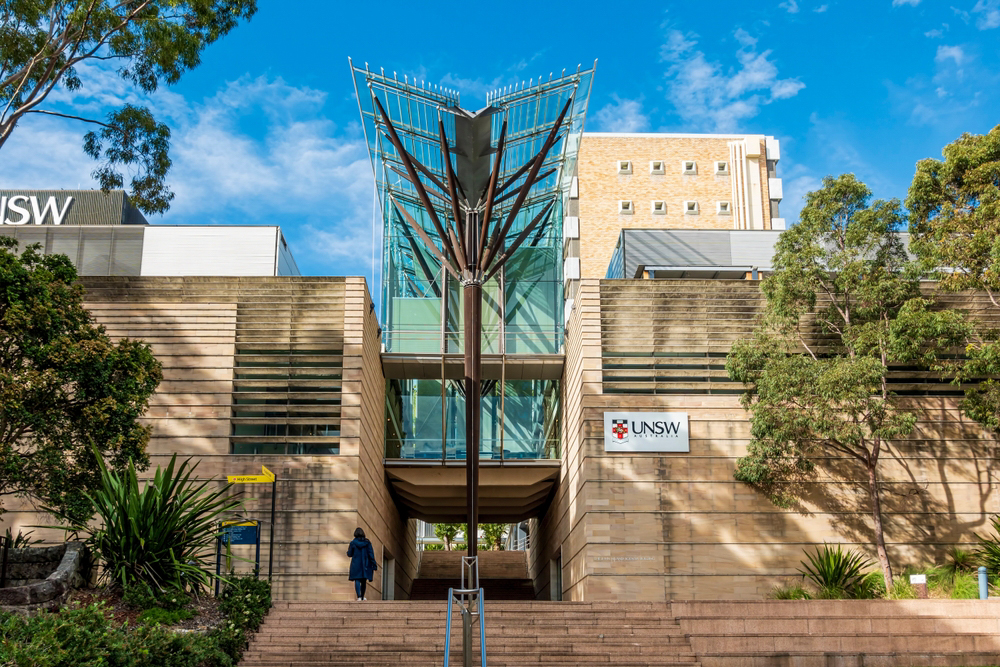
A new study by UNSW Sydney reveals that it is possible to significantly reduce the temperatures of a major city in a hot desert climate — while lowering energy costs.
Researchers discovered that a combination of cooling construction materials, technologies and techniques could reduce the temperature and energy needs of Riyadh, Saudi Arabia.
The findings recently published in Nature Cities, detail a multi-faceted strategy to cool Saudi Arabia’s capital city by up to 4.5 degrees Celsius combining highly reflective ‘super cool’ building materials developed by the High-Performance Architecture Lab with irrigated greenery and energy retrofitting measures.
Conducted in collaboration with the Royal Commission of Riyadh, the study is the first to investigate the large-scale energy benefits of modern heat mitigation technologies when implemented in a city.
The study found that the project demonstrated the tremendous impact advanced heat mitigation technologies and techniques can have on reducing urban overheating, decreasing cooling needs, and improving lives.
UNSW Scientia Professor, and one of the senior authors of the study, Mattheos (Mat) Santamouris specialises in developing heat mitigation technologies and strategies to decrease urban temperatures in cities.
Extreme urban heat affects more than 450 cities worldwide, increasing energy consumption needs and adversely impacting health, including heat-related illness and death.
Riyadh, the capital of Saudi Arabia, is one such city.
Situated in the centre of a desert, it is one of the hottest cities in the world, with temperatures that can exceed 50 degrees Celsius during summer.
Furthermore, climate change and rapid urbanisation are increasing the magnitude of overheating.
Santamouris said: “Limited greenery and large artificial surfaces made of conventional building materials like asphalt and concrete trap heat, meaning the city continues to heat up.
“Additional heat from car pollution and industrial activities also increases the city’s temperature.”
Simulating city-scale heat mitigation scenarios
For the study, the team led by UNSW researchers ran large-scale cooling climatic and energy simulations of the Al Masiaf precinct of Riyadh, including the energy performance of 3323 urban buildings, under eight different heat mitigation scenarios to evaluate optimal strategies for lowering the temperature of the city and reducing cooling needs.
The modelling, which considered different combinations of ‘super cool’ materials, vegetation types and energy retrofitting levels, found it’s possible to decrease the outdoor temperature in the city by nearly 4.5 degrees Celcius during summer.
The strategy would also improve cooling energy conservation for the city by up to 16 per cent.
The recommended heat mitigation (or cooling) scenario for Riyadh includes using super cool materials implemented in the roof of the buildings and more than doubling the number of irrigated trees to improve transpiration cooling.
On the contrary, a blind implementation of urban cooling techniques not based on detailed and advanced scientific optimisation, like the use of non-irrigated greenery, may result in a substantial increase in the city’s temperature.
Santamouris said: “By implementing the right combination of advanced heat mitigation technologies and techniques, it is possible to decrease the ambient temperature at the precinct scale.
“For a sweltering city the size of Riyadh, significantly reducing cooling needs is also tremendous for sustainability.”
Santamouris stated that lowering the temperature of the city helps increase thermal comfort for people as well as reduce health issues from severe heat, decrease the concentration of pollutants and improve human productivity.
While not a part of this study, previous research found implementing similar cooling strategies in other cities can help reduce heat-related deaths.
Reducing energy demand at the urban scale
The research also simulated the energy impact of retrofitting measures for all 3323 buildings alongside heat mitigation technologies implemented at the urban scale.
Combining the optimal cooling technologies with energy retrofitting options — namely, improving the building envelope through better windows, insulation, solar and cool roofs — could decrease the cooling demand by up to 35 per cent.
Santamouris said: “This represents a substantial reduction to the energy needs for Riyadh that would help further reduce costs associated with cooling for the city while improving the quality of life for the local population.
The researchers now hope to work with the Royal Commission of Riyadh to begin implementing the tailored heat mitigation plan in the city, which would be the largest of its kind in the world.
Santamouris said: “Once implemented at the city scale, these advanced heat mitigation technologies will deliver important health, sustainability and economic outcomes for the city for years to come.”