RMIT urban researchers will lead a pioneering project examining how Australia’s built sector can transition to a circular economy for more sustainable buildings.
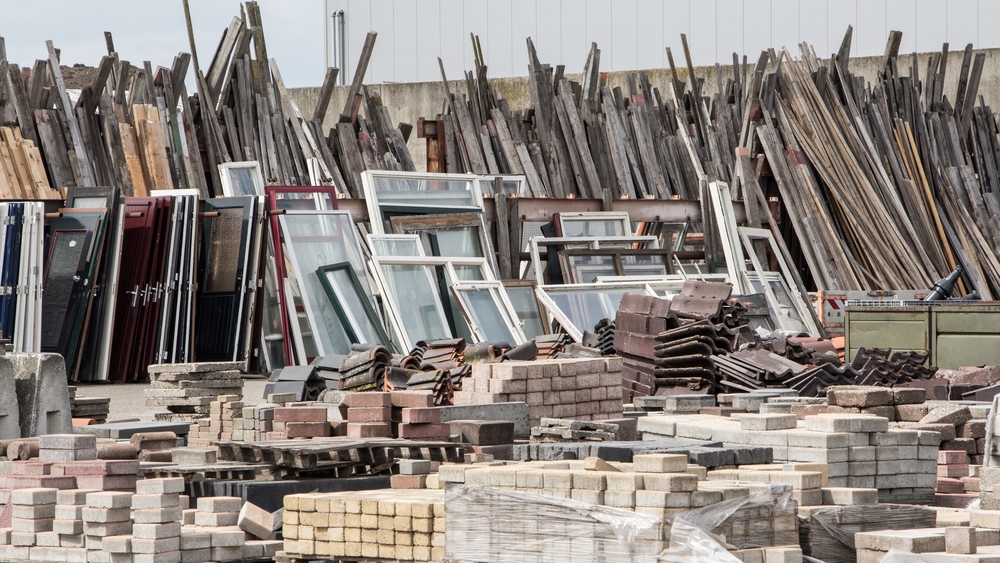
Every year, over 20 million tonnes of waste from the construction industry is sent to landfills. In addition, the changing climate demands more action towards sustainable buldings, but this is often held back due to the high costs of innovation, market failure and insufficient expertise.
A new project led by RMIT University will investigate how the construction sector can transition to a circular economy – an approach that seeks to eliminate waste and keep resources in a continually flowing loop.
RMIT’s Professor Ralphe Horne will lead the Australian Housing and Urban Research Institute-funded Inquiry Programme to establish an evidence base and framework for housing in a circular economy, in collaboration with the University of South Australia, University of New South Wales, University of Wollongong and The University of Adelaide.
“For the last few decades, Australian housing has been shifting towards a more sustainable footing,” Professor Horne said.
“However, it is hard to change processes and practices within this competitive and cost-driven industry without concerted, sustained and joined-up collaboration across policy and regulation, construction, design and broader society.”
“As we know, China has banned waste imports from Australia, and many other jurisdictions are doing the same, providing a significant opportunity for us to tackle waste and make broader changes to designing, delivering and consuming housing. This can be achieved through a circular economy approach.”
Horne, Deputy Pro Vice-Chancellor Research and Innovation for the College of Design and Social Context, said a shift to circular economy housing would ensure housing was sustainable, accessible and high quality, with extended product life and energy efficiency built in.
“It will transform the housing sector, reducing waste and pollution through good design, facilitated by intelligent incentives and robust regulations.”
Internationally the transition to circular economy housing is already developing and progressing. In Europe and Asia, circular economy policies have been strongly aligned with zero-waste and sustainable building innovation, through digitisation and automation and promoting new workforce skills and jobs.
“Given that the construction sector is Australia’s third-largest employer and is well connected to other service sectors, it is time we properly investigated how we can make circular economy work for us to deliver better and more sustainable housing,” Professor Horne said.
To focus in on key problems and opportunities, Professor Horne and his team will target four projects to inform a 10-year transition plan towards circular economy housing:
- Neighbourhood scale housing developments: Opportunities for neighbourhood-scale circular economy housing
- The apartment industry: Delivering circular economy sustainable apartment housing
- Large scale housing retrofit: circular economy opportunities and pragmatic solutions for social housing
- Building materials supply chains for circular economy housing
Professor Horne said applying circular economy principles would deliver a range of benefits.
“We’ll see improved community health, social and economic equity from affordable, high-quality energy-efficient homes, while addressing climate change mitigation and adaptation,” he commented.
“These broad community benefits will be supplemented by a radical reduction in building and renovation waste, towards more circular, resource-efficient and sustainable approaches.”
“Through this inquiry, we will deliver a co-ordinated analysis to inform cutting-edge practice and policy innovation.”